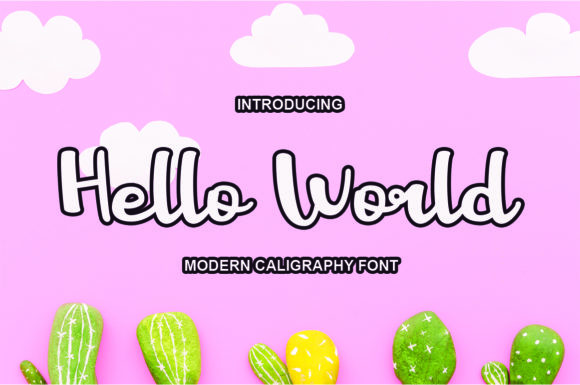
Hello World Font: A Handwritten Typeface for Modern Web Design
In the fast-paced world of digital product creation, establishing an immediate emotional connection with users is paramount. As web designers and UI specialists, we often rely on rigid grid systems and standard sans serif fonts to ensure clarity. However, this approach can sometimes strip a brand of its humanity. This is where Hello World steps in. Available through Script Amp, this sweet and friendly handwritten font offers a unique stylistic bridge between professional structure and personal warmth. Its natural flow makes it an incredibly versatile tool for designers looking to infuse personality into websites, landing pages, and digital interfaces without sacrificing readability.
The visual character of Hello World is defined by its organic strokes and approachable demeanor. Unlike many script fonts that struggle with legibility on screens, this typeface maintains a consistent rhythm that guides the eye naturally. For a digital product creator, this means you can deploy it in hero sections or call-to-action areas where trust and engagement are critical. The font's "handwritten" quality does not feel forced or overly decorative; instead, it mimics the genuine motion of a pen, creating a sense of authenticity that polished geometric fonts often lack. This authenticity is vital for brands aiming to build a loyal community rather than just a user base.
Elevating Visual Hierarchy in Digital Layouts
Effective web design relies heavily on visual hierarchy to guide user behavior. Hello World serves as an excellent display font for establishing this hierarchy. When placed alongside a clean sans serif font for body copy, it creates a striking contrast that draws attention to key messages. Consider a SaaS landing page or a coaching website; using Hello World for the main headline immediately signals that the brand is accessible and human-centric. It breaks the monotony of corporate typography and invites the visitor to read further.
This typeface shines particularly bright in conversion-focused layouts. In online stores or boutique e-commerce sites, using Hello World for promotional banners or limited-time offer headers can create a sense of urgency mixed with friendliness. It feels like a note from a friend rather than a cold advertisement. For app screens, it works beautifully in empty states or welcome messages, softening the digital experience and making the interface feel more intuitive and less mechanical. The key is restraint; because it is a handwritten style, it performs best when used for short phrases, section headings, or logo text rather than long paragraphs.
Optimizing Readability Across Devices
One of the primary concerns when selecting a premium font for web use is responsiveness. A font that looks stunning on a 27-inch monitor might become illegible on a mobile device. Hello World has been designed with digital readability in mind. Its stroke weight and letter spacing are balanced to ensure clarity even at smaller sizes. However, as a designer, you must still apply best practices. When using this font on mobile screens, ensure that the line height is generous enough to prevent characters from touching, which can happen with cursive styles.
For dark backgrounds or image overlays, consider increasing the font weight or adding a subtle text shadow to maintain contrast. If your project involves a light background, the natural black ink simulation of Hello World provides excellent visibility. Always test your typography on actual devices, not just in design software. Check how the font renders on iOS versus Android, as hinting differences can affect the crispness of the handwritten details. For buttons and small interactive elements, ensure the size is large enough to be tapped easily while remaining readable.
Strategic Font Pairing for Brand Identity
No font exists in a vacuum. The true power of Hello World emerges when it is paired correctly with supporting typography. For a modern, editorial digital identity, try pairing this handwritten font with a classic serif font for body text. This combination evokes a sense of sophistication and storytelling, perfect for blogs, portfolio sites, or luxury product pages. Alternatively, for a tech-forward or minimalist aesthetic, pair it with a neutral sans serif font. This keeps the overall look clean while allowing Hello World to act as the creative accent that defines the brand's voice.
- Creative Portfolios: Use Hello World for project titles and navigation labels to showcase artistic flair.
- Course Sales Pages: Apply it to testimonials and instructor quotes to add a personal touch of endorsement.
- Digital Ads: Leverage its friendly style in social media graphics to increase click-through rates.
- Logo Design: Utilize the unique ligatures and alternates to create a memorable logotype for startups.
When building a comprehensive brand kit, consistency is key. Define exactly where Hello World will appear in your style guide. Will it be reserved strictly for H1 and H2 tags? Or will it also feature in pull quotes and footer signatures? By establishing these rules, you ensure that the font enhances the user experience rather than distracting from it. The goal is to create a cohesive online identity where every typographic choice reinforces the brand message.
Technical Considerations and Licensing
Before integrating Hello World into a client project or commercial product, it is essential to review the technical specifications and licensing terms. As a font available via Script Amp, it likely comes in standard web-ready formats such as WOFF and WOFF2, which ensure fast loading times and broad browser compatibility. Check if the package includes multiple weights or stylistic alternates, as these features provide greater flexibility in your design system. Multilingual support is another crucial factor if you are designing for a global audience; verify that the character set covers the necessary languages for your target market.
Furthermore, always adhere to proper commercial font licensing. Whether you are building a template for sale, designing a logo for a client, or launching an online store, the license dictates how you can legally use the asset. Most premium fonts require a specific desktop license for static images and a separate webfont license for embedding code on live sites. Ignoring these details can lead to legal complications down the road. Treat your typography assets with the same level of care as your code and imagery.
Ultimately, Hello World represents more than just a set of characters; it is a design tool that humanizes the digital space. In an era where users crave genuine connection, a friendly handwritten font can be the difference between a bounce and a conversion. By thoughtfully applying this typeface to your headers, banners, and brand assets, you create a digital environment that feels welcoming, professional, and distinctly human. Let your imagination guide the implementation, but ground your decisions in usability and strategic brand alignment.